
Activities
Overview
Cycling the Gotlandsleden, hiking, swimming, sea stacks and Lummelunda Cave, the best activities on Gotland at a glance, with prices in SEK and everything that costs nothing.
Gotland is a rewarding destination for anyone who wants to get outdoors: the terrain is mostly flat, with the highest point - Lojsta hed, only 82 metres above sea level. Long coastlines, open pine forest, sparse heathland and limestone-rich soil combine into an unusual mix, from a long-distance cycle route to cave tours and orchid- and bird-watching. Three dedicated guides cover the big themes in more depth: Cycling, Hiking and Swimming & Water Sports.
Most outdoor activities cluster around early summer to early autumn. Much of it costs nothing thanks to Sweden's Right of Public Access (Allemansrätten), sea stack fields, nature reserves and beaches are all open access. Anything with seasonal opening hours (the cave, hire outlets, boat trips) is worth checking with the operator before you travel.
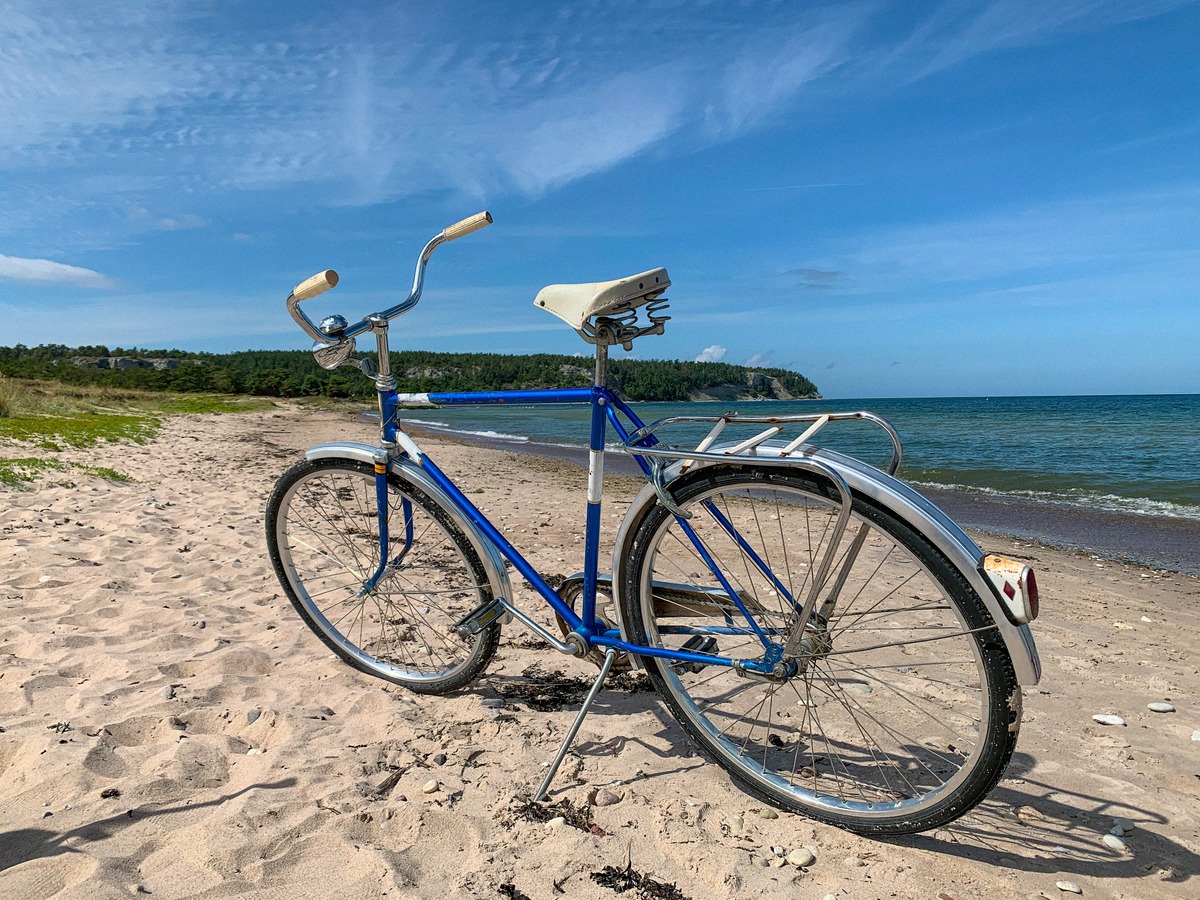
The flat island is ideal for cycling. Its backbone is the Gotlandsleden, a signposted circular cycle route roughly 540 kilometres long in total, split into two main routes: the Norra Gotlandsleden in the north (around 292 km) and the Södra Gotlandsleden in the south (around 337 km). The route is free to ride and there are no fixed daily stages, cyclists plan the loop to suit themselves.
On foot, Gotland is just as rewarding to explore. The mostly flat terrain and over 100 nature reserves suit walkers of different levels. The main long-distance trails follow the coast, above all the Östkustleden (73 km) on the east coast and the Klintkustleden (30 km) along the steep cliffs in the northwest; the pilgrim route S:t Olofsleden (around 60 km) links seven medieval churches with Visby Cathedral.
For shorter walks, the nature reserves are worthwhile: Ekstakusten on the west coast south of Djupvik, with shingle beaches, wind-shaped pine forest and the old fishing camp Kronvall, or Ullahau on Fårö, a loop trail through an old dune landscape. Access is free everywhere. All routes, distances and the Gotska Sandön trips are covered in the hiking guide, and more on the protected areas in the nature guide.
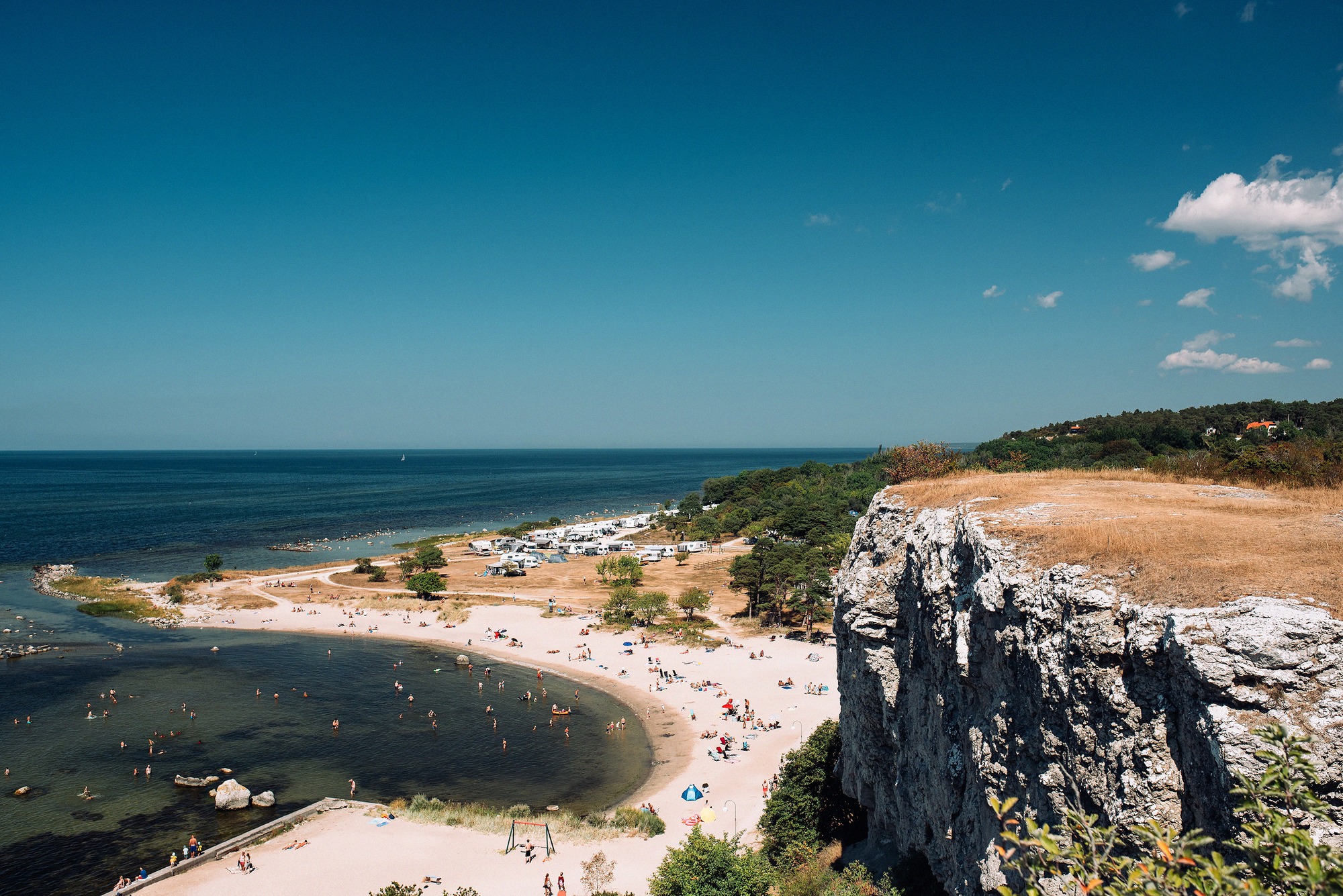
The swimming season is short but reliably sunny: in July and August the Baltic around Gotland reaches around 17 to 18°C. The best-equipped beaches are Tofta south of Visby, also the island's best-known surf and kitesurf spot, and Sudersand on Fårö, one of Gotland's longest sandy beaches. Kayaks and SUP boards can be hired from self-service stations and operators around the island, with guided tours running as far as the seal colony off the southern tip. All the spots, hire outlets and safety tips are in the Swimming & Water Sports guide, and the best beaches are in the beaches overview.
Gotland's geological landmarks are the sea stacks (raukar), column-shaped limestone formations of durable Silurian reef limestone, formed from tropical coral reefs around 420 million years old. The most spectacular fields are Langhammars on Fårö, with the face-shaped stack "Langhammarsgubben", Digerhuvud - Sweden's largest sea stack field, now a nature reserve, as well as Folhammar near Ljugarn on the east coast and the Lergravsviken nature reserve on the northeast coast. All are open access year-round.
Below ground, Lummelundagrottan north of Visby is worth the visit, one of Sweden's longest caves: a good 4 kilometres of the system have been explored so far, with stalactites and fossils, and it stays cool underground year-round. Access is by guided tour only:
The limestone-rich soil supports an unusual variety of species: 39 of Sweden's roughly 50 orchid species occur on Gotland, including Dactylorhiza gotlandica, found only here. The first species flower from early May, with the best period for seeing many species in bloom between early June and mid-July. There's no official list of public orchid meadows; the bird island Stora Karlsö (over 20 species, mass flowering late May to early June, boat trips from Klintehamn, booking required) and Östergarns prästänge are regularly mentioned.
For birdwatching, the migration periods in April/May and September to November are especially worthwhile. Hoburgen at the southern tip is considered the island's best spot, where geese, ducks and auks pass at close range. There are also two peninsulas with similar names at opposite ends of the island: Norsholmen in the north of Fårö (avocets, turnstones, terns; access restricted 15 March to 15 July) and the Närsholmen nature reserve on the southeast coast (barnacle geese, waders; closed during the breeding season), plus Lake Paviken near Västergarn. More protected areas and rules are in the nature guide.
The small island of Fårö north of Gotland packs many activities into a small area. The Swedish Transport Administration runs a free car ferry across the narrow Fårösund strait (Fårösund-Broa route): 1,300 metres, around 6 minutes crossing time, up to every 15 minutes in summer, cars and bicycles ride free, making it ideal for a day trip by bike.
Practical information on getting there, car hire and getting around locally is in the Gotland travel information.