
Folhammar
Raukar reserve on Gotland's east coast
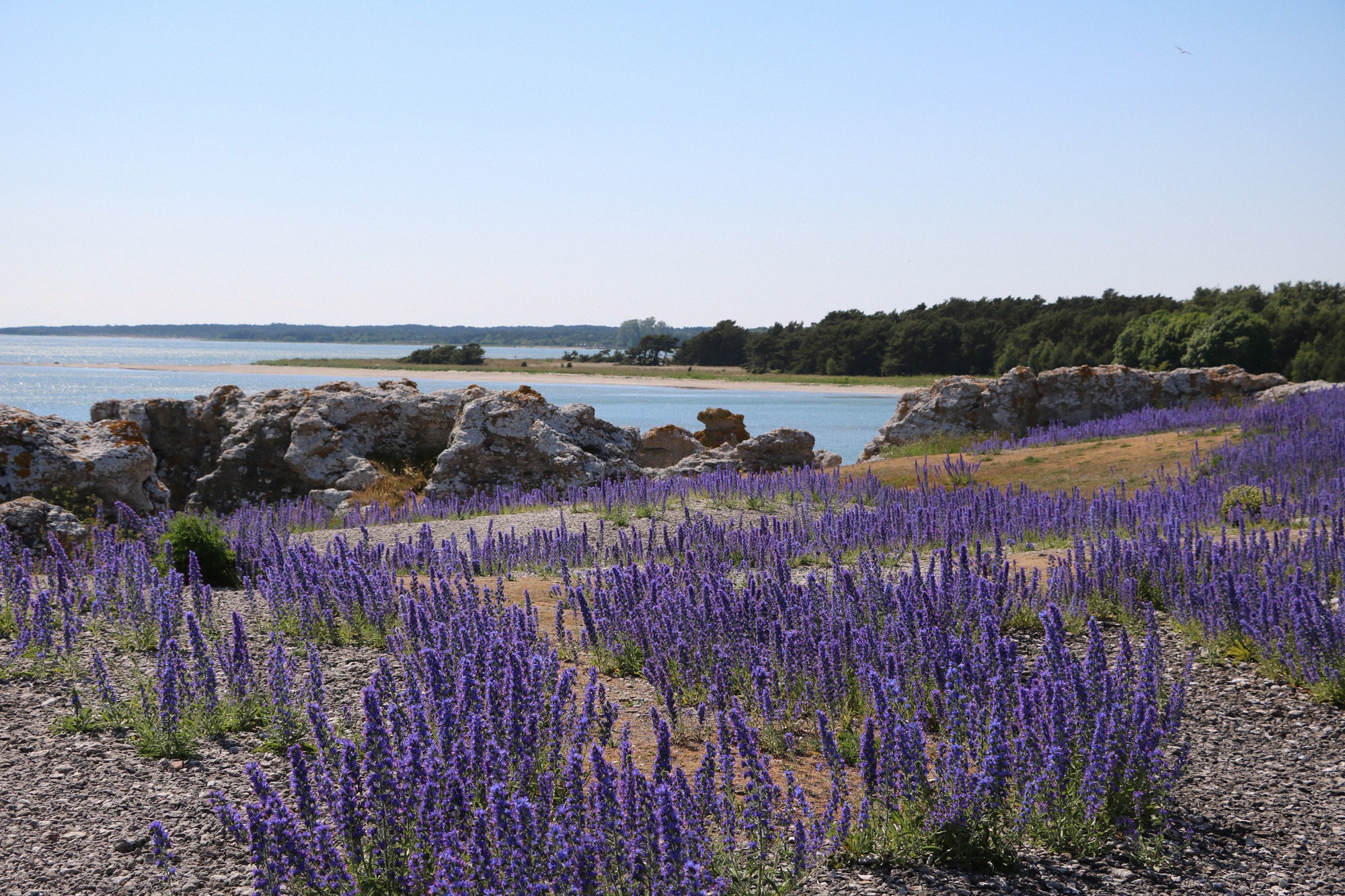
Folhammar near Ljugarn is the best-known raukar area on the east coast of Gotland's main island: a freely accessible nature reserve right by the sea.
Contents
Raukar on the main island
Not all raukar are on Fårö: Folhammar, in the parish of Ardre about one kilometre north of the seaside village of Ljugarn, is the best-known raukar area on the east coast of Gotland's main island. If you'd rather skip the trip out to Fårö, you'll find a dense field of striking limestone stacks right by the sea here, over about 500 metres, numerous raukar stand along the shore, several of them up to six metres tall.
The area has been a protected nature reserve since 17 December 1974 and is managed by the Länsstyrelsen Gotland (Gotland county administrative board). It covers around 77 hectares, roughly 17 hectares of land and 60 hectares of water - stretching along 1.8 kilometres of coastline from the mouth of the Halsgårdeån stream to the small fishing hamlet of Vitvär.
Shaped by reef and fossils
The raukar at Folhammar are made of fossil-rich reef limestone. Visible within it are mainly fossilised stromatoporoids, known on Gotland as kattskallar ("cat skulls"), along with remains of crinoids (sea lilies). The material comes from the coral reefs of a tropical primordial sea, where Gotland lay some 400 million years ago. The softer rock has been worn away over time, leaving the harder columns that now stand on the shore.
In the northern part of the reserve there's also a Trojaborg, a labyrinth laid out in stone, of a kind found in several places across the island.
What to expect
Folhammar is well set up without losing its natural character. On site you'll find:
- a car park with access at the edge of the reserve
- toilets (dry toilets) and information boards
- rest areas as well as designated barbecue and fire spots
- a paved path that makes the area accessible with a pushchair or wheelchair
The central raukar field is the main draw: the stacks line the coast for about 500 metres. Within the field itself the ground is stony, so sturdy footwear is worth having. The pale columns look most atmospheric in the morning or late afternoon, when the low light brings out their outlines.
Visiting: the practical details
- Access: The reserve is freely accessible year-round, with no gates and no admission fee. A parking fee may apply at the car park, this isn't officially confirmed.
- Getting there: Folhammar lies directly north of Ljugarn on the east coast and is easy to reach by car. A visit combines well with a wander through the seaside village and its beach.
- Rules: Dogs must be kept on a lead. Camping, driving motor vehicles off the marked paths, and landing unmanned boats are prohibited without a permit, as this is a protected nature reserve.
- Combine with: If you want to see more raukar, the best-known fields are on Fårö, such as Langhammars and Digerhuvud. More natural sights on the island are gathered in the nature guide.