
Fårö
Rugged island scenery with raukar and Bergman history
Fårö is the small island north of Gotland, famed for its raukar rock formations, the beautiful Sudersand beach and as the home of filmmaker Ingmar Bergman.
Contents
The island to the north
Fårö sits just north of Gotland, separated by a narrow sound. With its bare heathland, pine forests and wind-battered coastline, the island feels noticeably wilder than the rest of Gotland, and that's exactly its appeal. Fårö is also known through the film director Ingmar Bergman, who lived here, made several films on the island and is buried here.
The free ferry
You reach Fårö by a free car ferry from Fårösund, at Gotland's northern tip. The short crossing is part of the public road network; during the day you simply join the queue, no booking needed. Departure frequency and any traffic notices change with the season, so the Trafikverket timetable is the source to check. In busy summer hours, build in some extra time.
Raukar, the stone sentinels
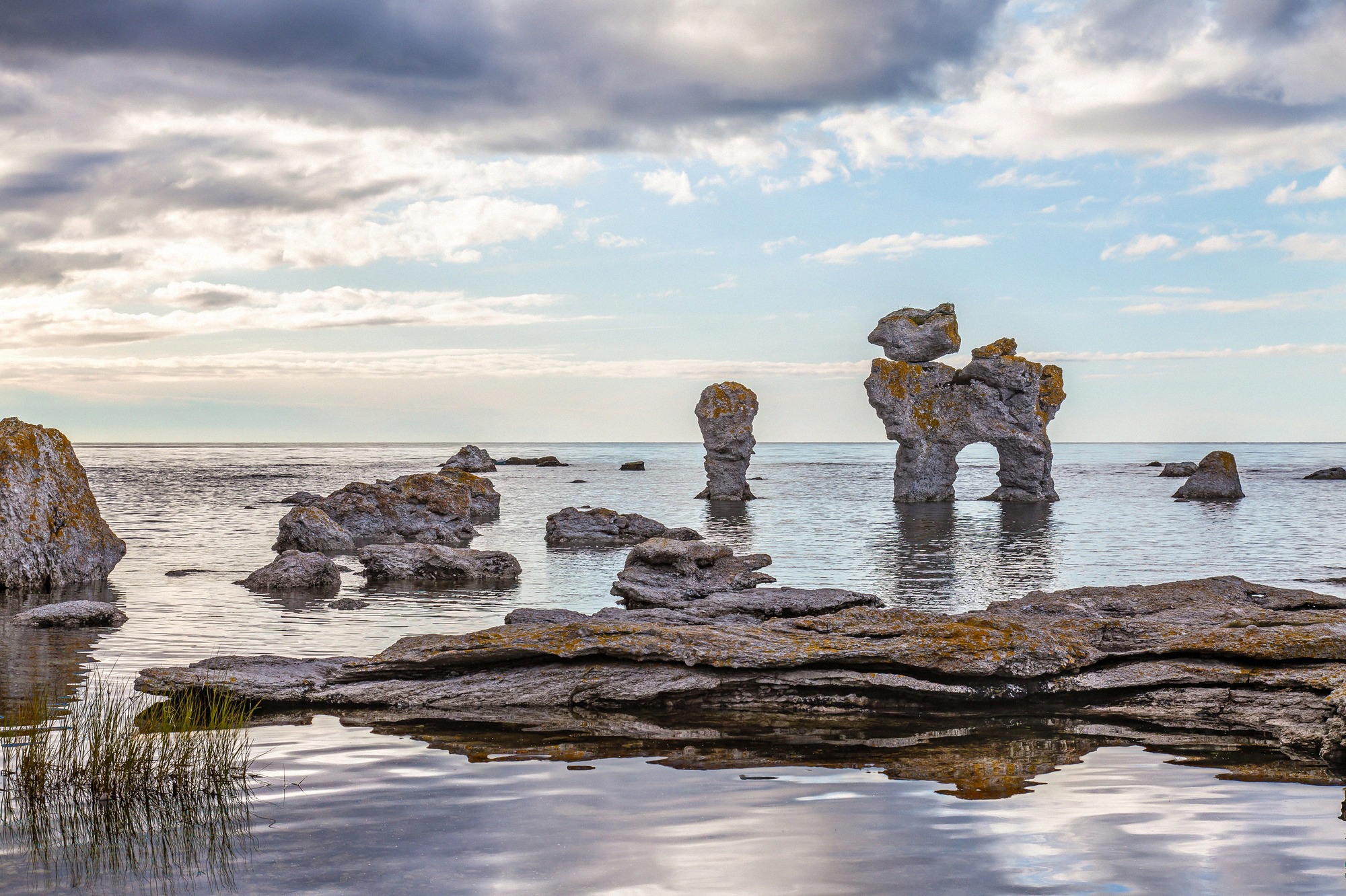
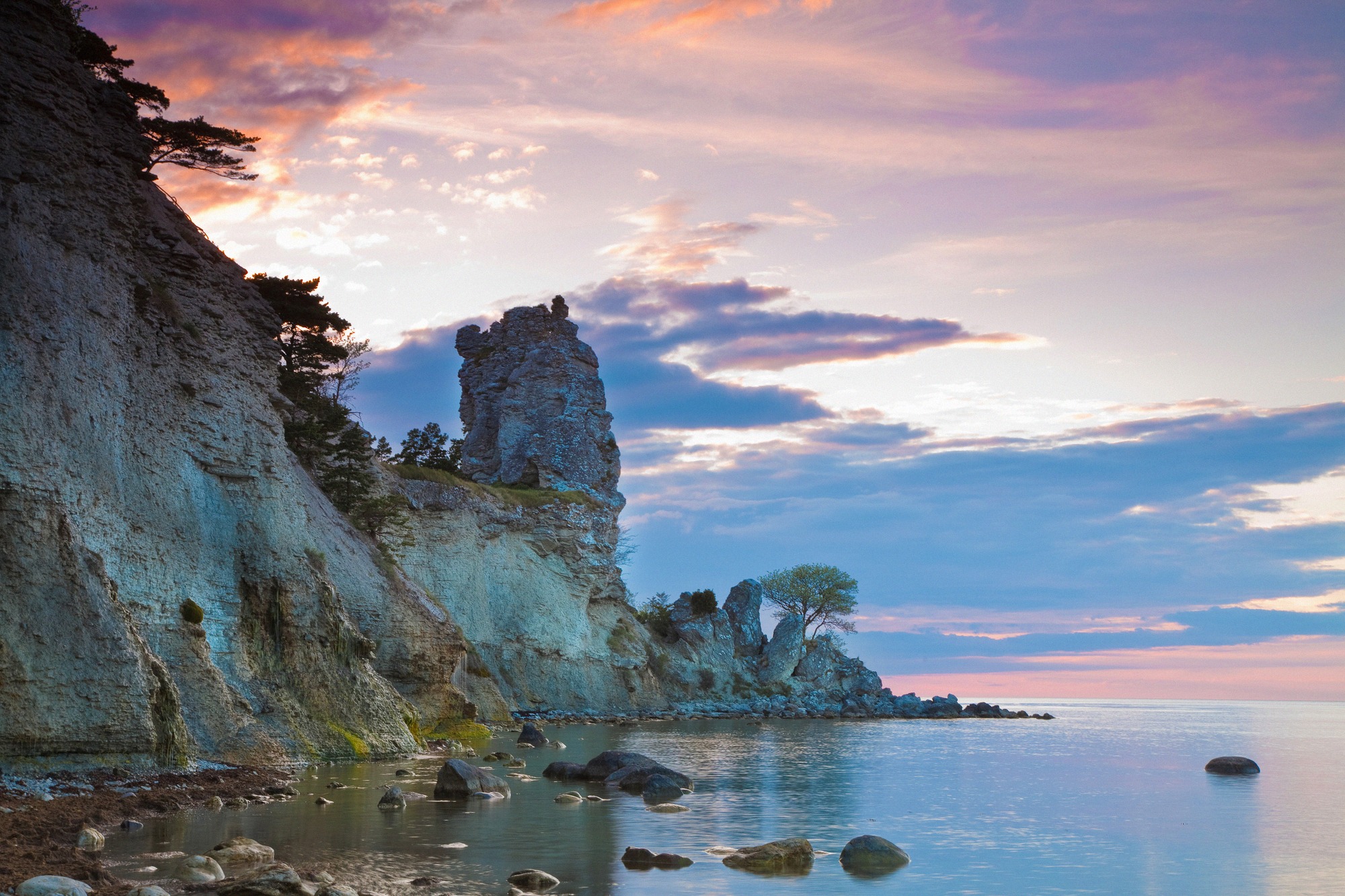
Fårö's biggest draw is its raukar: striking limestone stacks carved out of the coastline by the sea over thousands of years. The most impressive fields are at Langhammars and Digerhuvud on the west coast, whole clusters of strange stone shapes right on the shore. More in the raukar guide.
Sudersand and beyond
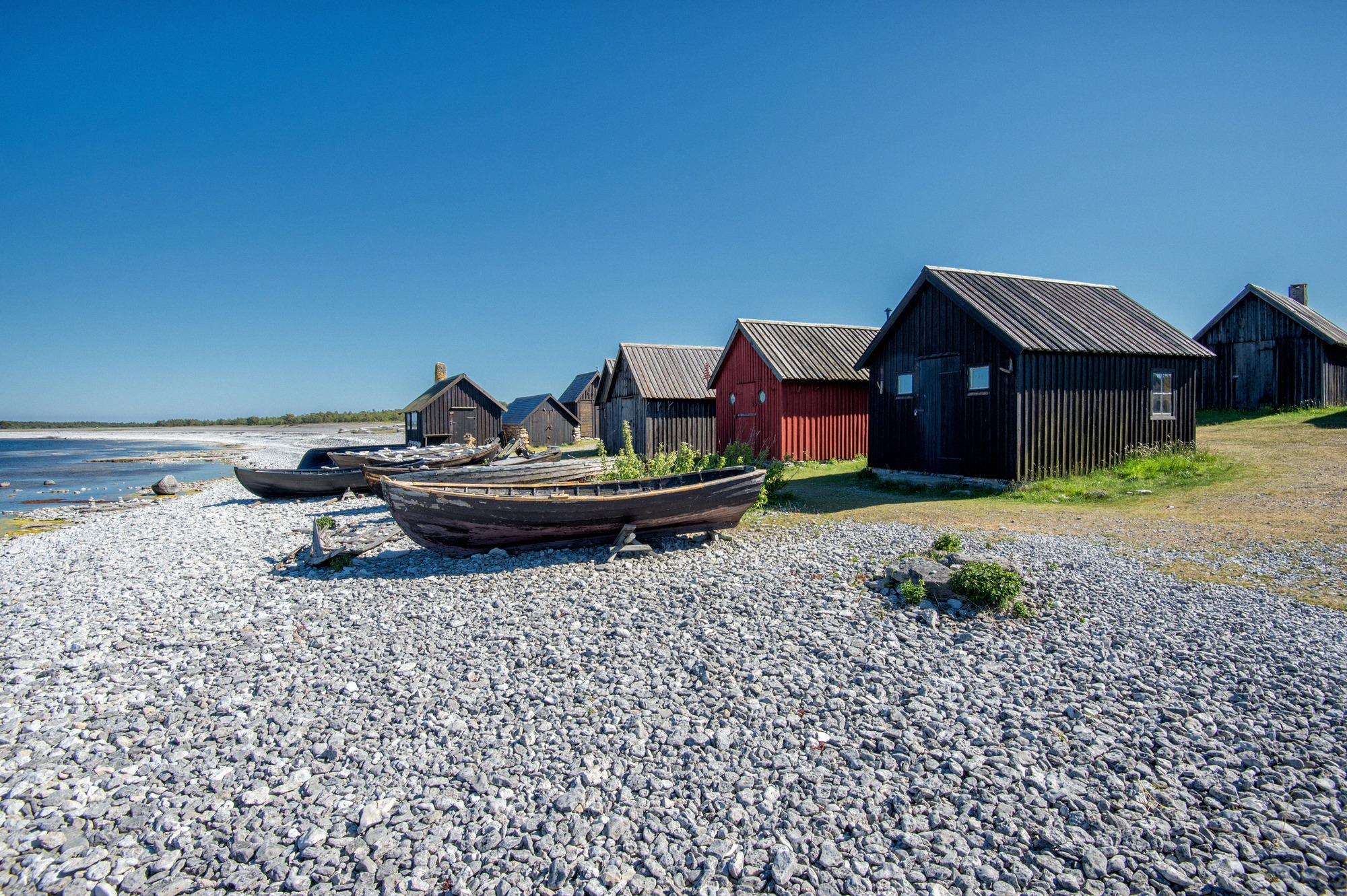
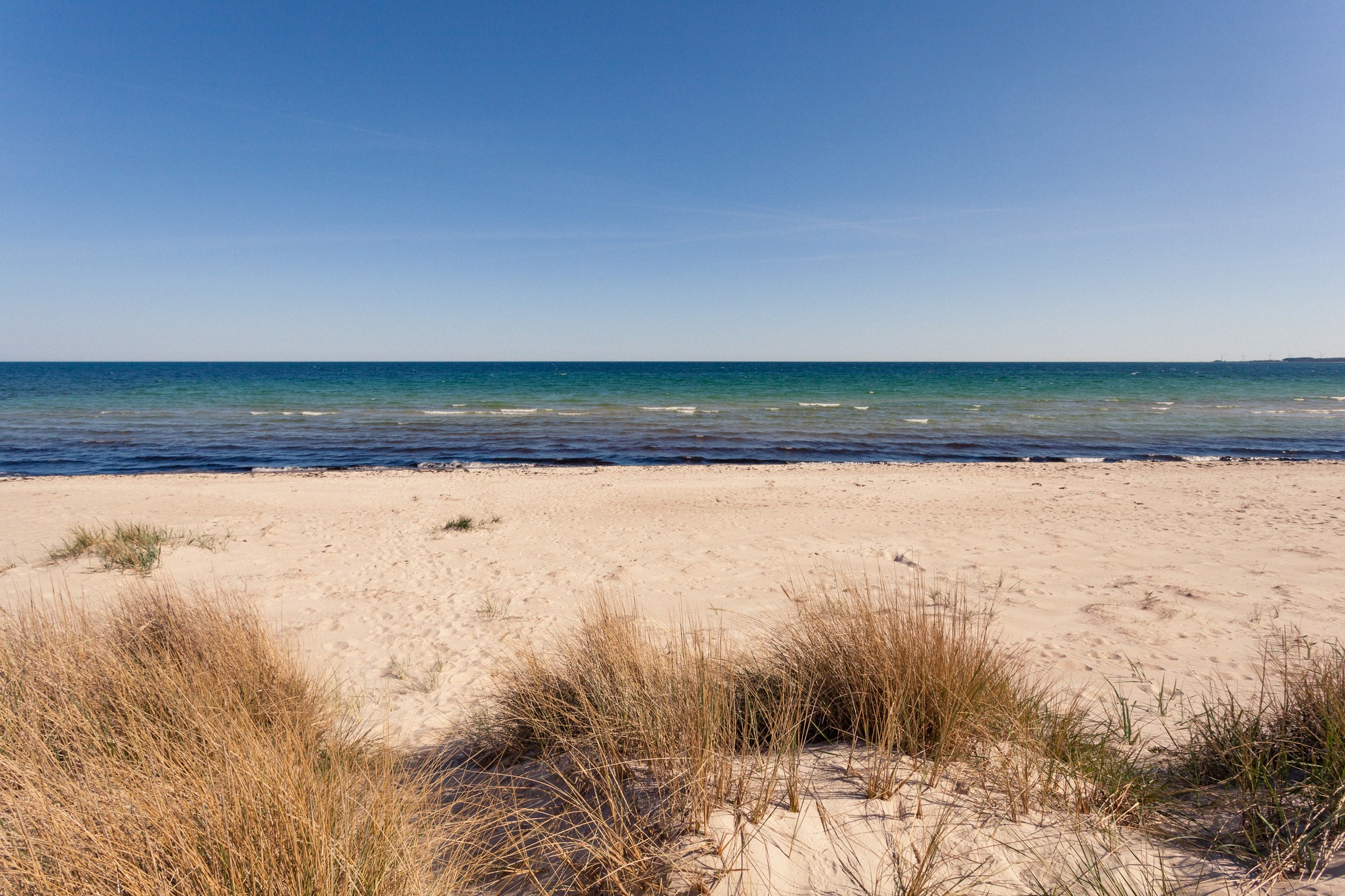
On the east side lies Sudersand, a long, gently shelving sandy beach with pale sand and shallow water, one of the finest beaches in Sweden and ideal for families. Also worth seeing are the lighthouse at the island's northern tip and the small, reed-thatched fishermen's huts ("fiskelägen") dotted around the coast.
Tip for your visit
Fårö works well as a day trip from Gotland, whether you're driving or cycling. Allow plenty of time: it's around 55 kilometres from Visby to Fårösund. A full day is enough to combine the ferry crossing, the main raukar fields and a stop at the beach without rushing. Open the Gotland map and plan a loop rather than separate there-and-back trips.
A practical day route
- Head to Fårösund early: this gives you a buffer for the ferry and gets you to the nature sites before the busiest traffic of the day.
- Pick one big raukar field: make Digerhuvud or Langhammars your focus.
- Coast or culture: add the fishermen's huts, the lighthouse, or a site linked to Bergman's time on the island.
- Sudersand in the afternoon: the beach makes a relaxed final stop before heading back to the ferry.
On a bicycle, scale the route down to one part of the island. Let distances, wind and the return ferry crossing weigh more than the number of stops.
Around Fårö
Digerhuvud
Digerhuvud on Fårö's west coast is Sweden's largest raukar field at about 3.5 kilometres, a long stretch of limestone stacks along the sea.
Langhammars
The Langhammars nature reserve on northern Fårö holds around 50 raukar at the pebble beach of Klajvika - Gotland's most photographed limestone stacks.
Sudersand
Sudersand in northeast Fårö is a wide, white sand beach with shallow, clear water and dunes, repeatedly voted Sweden's most beautiful beach.