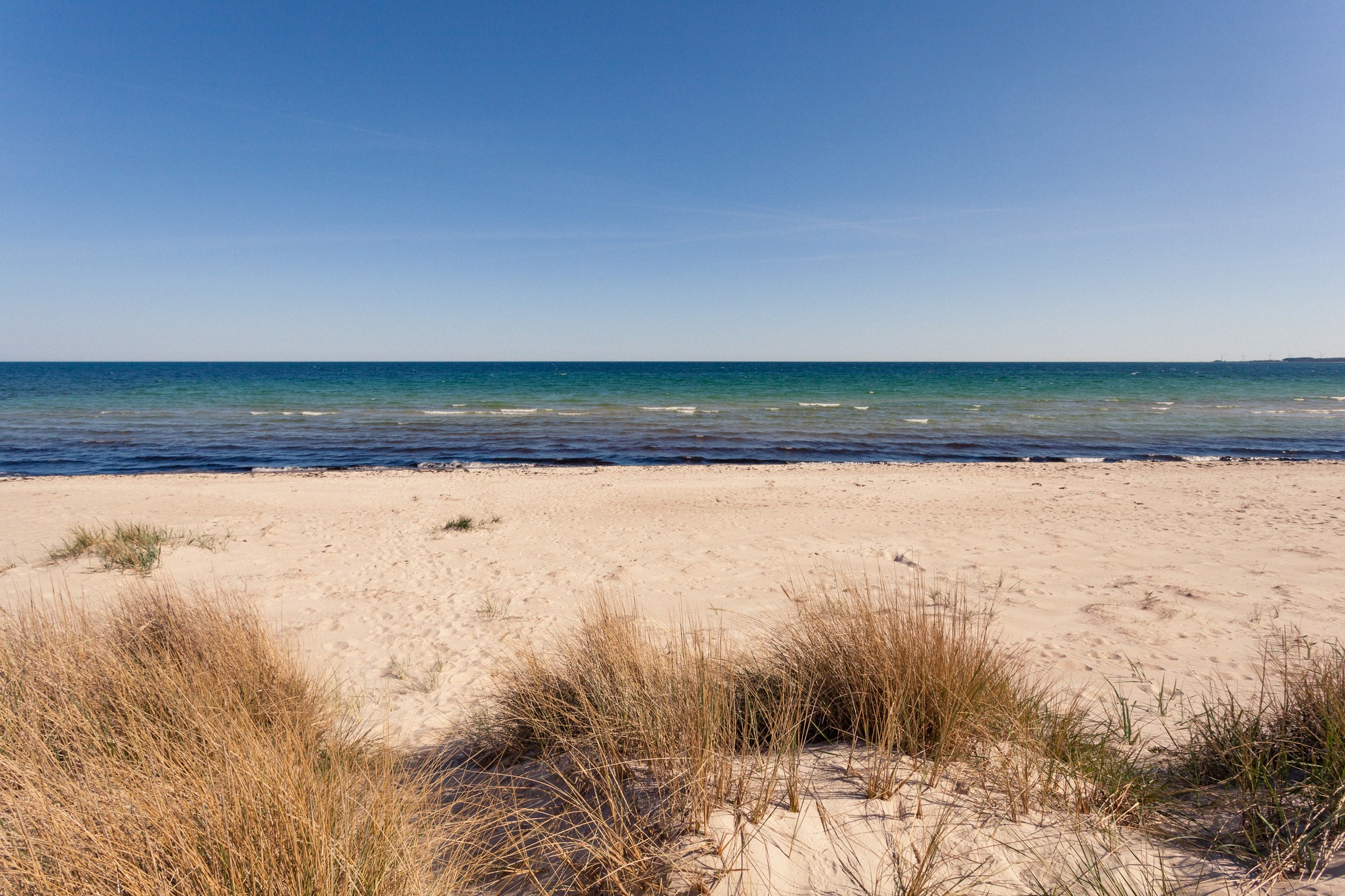
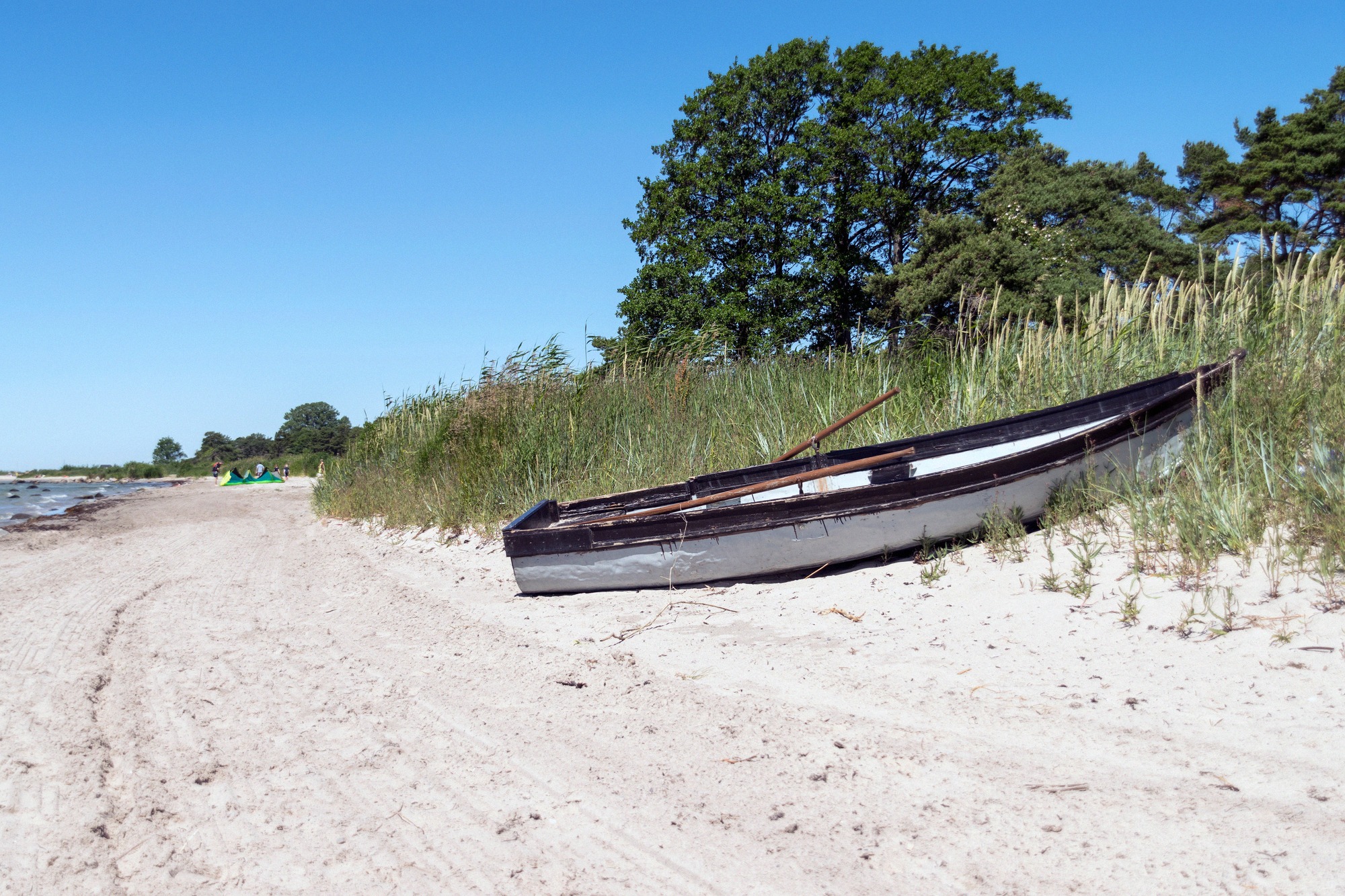
Gotland is one of Sweden's sunniest regions, and its coastline shifts within a short
distance between fine sand, shallow coves and the island's distinctive limestone
formations. This overview groups the beaches by what you're looking for: a lively
beach scene with facilities, long white sandy stretches, quiet coves, or swimming
among the raukar rock formations. For water temperatures
through the season and what to watch for with currents and algae blooms, see the
swimming guide.
Tofta, the island's liveliest beach
Tofta lies around 20 kilometres south of Visby and
is Gotland's best-known and busiest beach. According to the Swedish Agency for Marine
and Water Management (Havs- och vattenmyndigheten), the official EU bathing site is
about 2 kilometres long, with a roughly 20-metre-wide sandy strip and a gently
sloping shoreline. Including South Tofta as far as Gnisvärd, the connected arc of beach
stretches for around three kilometres. Water quality was rated "excellent" in the most
recent assessment (2025 season).
Tofta also has the densest facilities of any beach on the island:
- Amenities: beach club, restaurants (including Broman & Son), a bar with
after-beach events, a kiosk and shop, a pool, and padel and volleyball courts.
Tofta Camping sits right behind the beach (more in the
camping guide).
- Getting there and parking: two main beach access points with paid car parks,
payable via app. In peak season, parking costs around 60 SEK per day; part of
this funds the lifeguard service.
- Safety: Tofta is the only beach on Gotland with a lifeguard station
(Livräddartorn, in place since 1995), staffed during the peak summer weeks 28 to 31.
If you'd rather avoid crowds, note that Tofta is the busiest spot on the island in
high season. It's also Gotland's best-known surfing, windsurfing and kitesurfing
spot, side-shore winds from the south-west and north-west create a beach break, with
the first 80 metres or so shallow enough to stand. See the
swimming guide for more on watersports here.
Sudersand on Fårö, the most beautiful swimming beach
The region's most scenic swimming beach lies on the neighbouring island of
Fårö: Sudersand, around
75 kilometres north of Visby. According to Havs- och vattenmyndigheten, the
official EU bathing site is about 2.5 kilometres long, with a wide band of very
fine white sand, shallow water and dunes (some tourism sites cite up to four
kilometres, but the documented official figure is 2.5 km). Water quality was rated
"excellent" in 2025.
- Amenities: Sudersand Resort provides toilets, restaurants, bars, cafés, kiosks
and shops, a playground, an outdoor gym, and tennis and padel courts. Parking is
paid; overflow traffic is directed to the Fårö Samfällighet car park. Sudersand is
one of the most visited spots on Fårö, drawing on the order of 100,000 visitors
over the summer.
- Dog ban: dogs are banned from Sudersand beach from 1 May to 30 September
(local regulation). The same ban applies during that period at
Tofta, Gnisvärd, Burgsvik, Slite, Visby Havsbad and a
number of other supervised bathing spots. On top of that, dogs must be kept on a
lead at all of Gotland's beaches from 1 March to 20 August; dedicated dog
beaches exist at Slite, Lickershamn and Brissund, among others.
Sudersand is only reachable via the free Fårö ferry (Fårösundsleden), operated by
the Swedish Transport Administration (Trafikverket) between Färösund and Broa. The
crossing covers around 1,300 metres and takes about six minutes. The ferry runs
year-round from early morning to evening, roughly every 10 to 15 minutes during summer
daytime hours, with a call-out service overnight in places. From Visby, it's around
50 kilometres to the Färösund ferry terminal (about 50 minutes' drive), plus
another six kilometres or so on Fårö to reach Sudersand. If you're arriving from
outside Sweden, see the ferry guide for the wider
crossing to Gotland itself before this local hop.
Quiet coves in the south and east
If you prefer things quieter, head for the south and east coast. These beaches have
fewer facilities but far more space:
- Sandhamn lies around 40 kilometres south-east of Visby, on the
Östergarnslandet peninsula. According to the authority, the bathing beach is only
about 150 metres long, with a shallow, sandy bottom, some stones and light
vegetation, a small, low-key spot.
- Sandviken, near Sysne/Gammelgarn in the same area, is a good one kilometre
of flat sandy beach. For the 2026 season, a new service building, pitches, glamping,
cabins and several car parks are being added there.
- Burgsvik in the south-west is around 75 kilometres south of Visby. The
bathing beach is narrow, around 50 metres, and borders the fishing harbour;
there's a low-barrier jetty and a diving platform on the pier, a toilet in the
guest harbour's service building, and a paid car park. Burgsvik isn't an official
EU bathing site, but it's well served by bus: routes 10/11/12 take around
1 hour 45 minutes from Visby bus station.
Raukar beaches, swimming among the limestone stacks
A Gotland speciality is swimming within sight of the raukar
rock formations. Three areas stand out:
- Holmhällar at the southern tip: a large car park sits right by the beach area
(near Holmhällar guesthouse), so no long walk is needed. The raukar field curves
along around one kilometre of coastline, up to 40 metres wide, with the tallest
stacks nearly five metres high. Holmhällar lies within a nature reserve; nearby
bird-protection reserves may be closed during the breeding season.
- Folhammar on the east coast near Ljugarn is
reachable via a paved, low-barrier path suitable for pushchairs or wheelchairs. The
roughly 500-metre raukar field (stacks up to six metres tall) is flanked by
pebble beaches that give way to sand to the north and south, where you can swim.
- Langhammars on Fårö is
Gotland's most photographed raukar area (featured on the 200-krona banknote): over
50 stacks, some more than eight metres tall, on the beach above Klajvika bay. It's a
nature reserve, reached via a car park.
More quiet sandy beaches in the north
Around Fårö and along the north coast are several further, often secluded, sandy
beaches:
- Ekeviken on Fårö is a roughly 900-metre, flat sandy beach, ranked alongside
Sudersand and Norsta Auren as one of the three most popular beaches on Fårö.
- Norsta Auren on Fårö, at around five kilometres, is the longest, flat and
noticeably more secluded, a beach for anyone after space and quiet.
- Badhusparken/Bungeviken near Färösund (around 50 km from Visby) is a bathing
spot managed by the Region Gotland, with a mixed sand and gravel shore; the
Bungeviken section is around 200 metres long, very shallow and sandy.
Which beach suits you?
The official tourism classification is a useful guide:
- Families with young children: Åminne, Sudersand, Tofta (with playground),
Norrlanda/Hammars and Slite are particularly shallow and family-friendly.
Tofta is the only beach with lifeguard cover, see the
family guide for more.
- Younger, active visitors and watersports fans: Tofta is the liveliest beach with
the most facilities.
- Couples, nature lovers and those after peace and quiet: Norsta Auren, Sandhamn,
Burgsvik and the raukar beaches are noticeably calmer.
Wherever you swim, the same cautions apply: in offshore winds, inflatables can
drift out to sea, while onshore winds often create rip currents in the middle of bays.
Gotland also regularly sees cyanobacteria blooms (algal blooms, "algblomning")
during summer; avoid swimming in dense blooms, since they're toxic if swallowed and
can irritate the skin. The region tests water samples through the summer, for current
advisories and safety information, see the
swimming guide.