
Langhammars
Gotland's most famous raukar field, on Fårö
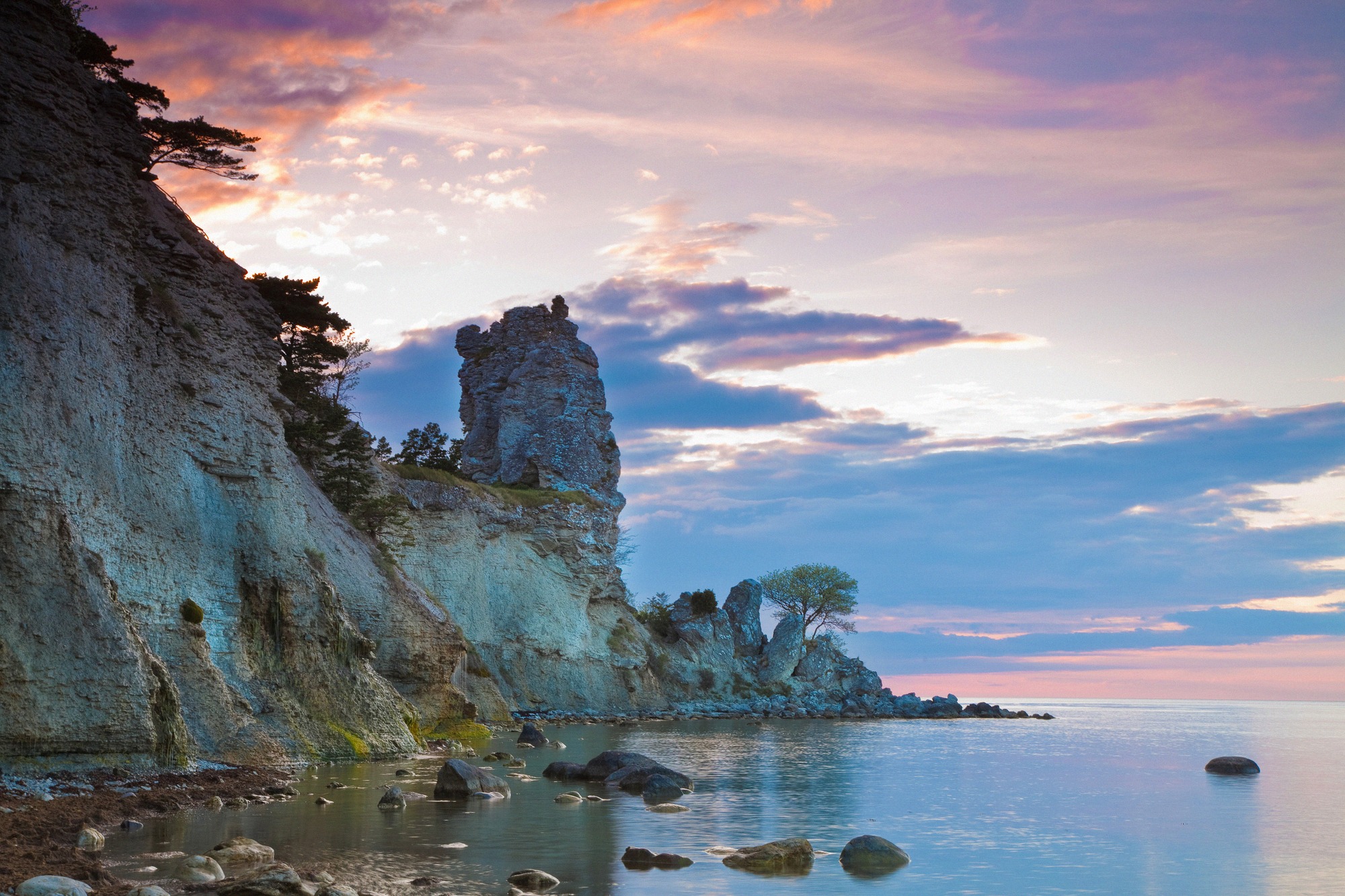
The Langhammars nature reserve on northern Fårö holds around 50 raukar at the pebble beach of Klajvika - Gotland's most photographed limestone stacks.
Contents
Gotland's most famous raukar
Langhammars, on the north of Fårö, is arguably the island's most famous raukar field. Around 50 limestone stacks stand at the pebble beach of Klajvika, some over eight metres tall and shaped so distinctively that individual stacks have their own names, among them "Langhammarsgubben" and "Guldstugan". They're Gotland's most photographed raukar: they even appear on the back of the Swedish 200-krona banknote, alongside Ingmar Bergman, who lived and filmed on Fårö.
The reserve covers 479 hectares, has been protected since 1931, and is now part of the European Natura 2000 network. It's managed by the Länsstyrelsen Gotland (Gotland county administrative board).
How the stacks formed
Around 400 million years ago, in the Silurian period, Gotland lay as a tropical seabed under water. Shells and skeletons of marine creatures formed reef limestone, harder than the layered rock around it. As the sea later retreated and waves worked the coastline over millennia, they wore away the softer surrounding rock. What remained were the hard reef-limestone cores: the raukar that now stand on the beach like petrified sentinels.
What to expect
A short path leads from the car park straight to the raukar field. The ground on the beach is stony and uneven - sturdy footwear is worth having. Between the stacks you can wander freely, take photos, and watch the play of light and shadow.
Langhammars is at its most atmospheric in the evening light, when the pale limestone stacks begin to glow warm. At this northern latitude of 57.9°, the difference in daylight hours is extreme: around the summer solstice the sun doesn't set until about 22:00, while in December it's already down by around 15:00. Plan a summer visit for late evening, from around 21:00, and a winter visit for the afternoon.
Visiting: the practical details
- Getting there: From the ferry at Fårösund it's around 17 kilometres (about 20 minutes) by car or bicycle to the north of Fårö.
- On site: Car park, information board, rest area with picnic tables, a fire pit, and an accessible dry toilet. Freely accessible, year-round, no admission fee.
- Rules: Damaging or removing stones or rock within the reserve is prohibited; so are motor vehicles off marked tracks and open fires outside the designated fire pit.
- Combine with: Pairs well with the nearby, long stretch of raukar at Digerhuvud and a beach stop at Sudersand. More natural sights are gathered in the nature guide, and the raukar overview gives a broader picture.
Frequently asked questions
How much does it cost to visit Langhammars? +
When is the best time for photos at Langhammars? +
How do I get to Langhammars? +
Can I take stones from the beach? +
Nearby
Sudersand
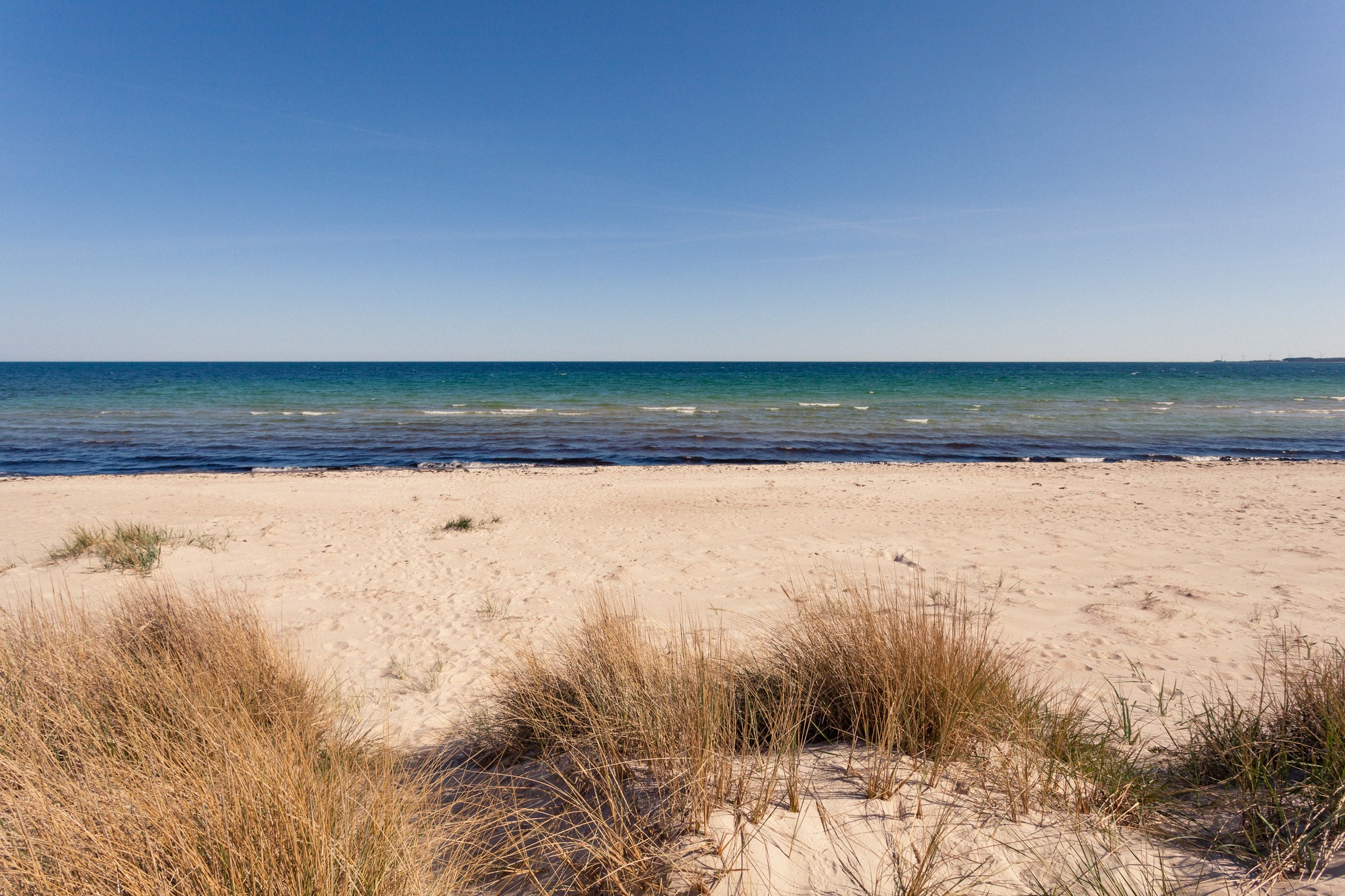
Sudersand in northeast Fårö is a wide, white sand beach with shallow, clear water and dunes, repeatedly voted Sweden's most beautiful beach.
Digerhuvud
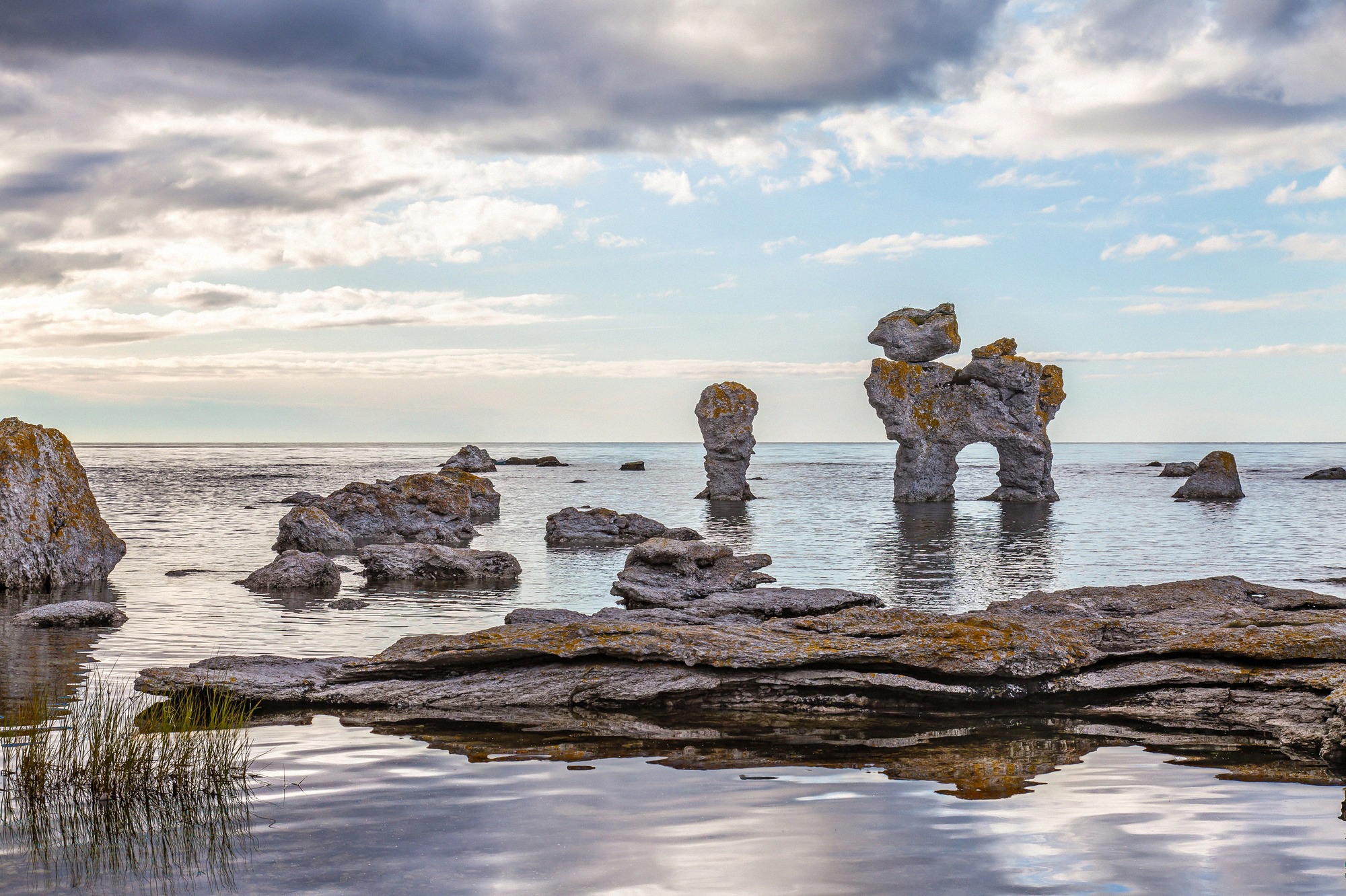
Digerhuvud on Fårö's west coast is Sweden's largest raukar field at about 3.5 kilometres, a long stretch of limestone stacks along the sea.