
Holiday Homes on Gotland
Renting a stuga on Gotland, season, prices, locations, facilities and booking. What cleaning fees, bed linen and changeover days cost, and where to book.
Contents
Living like the locals, in your own summer house
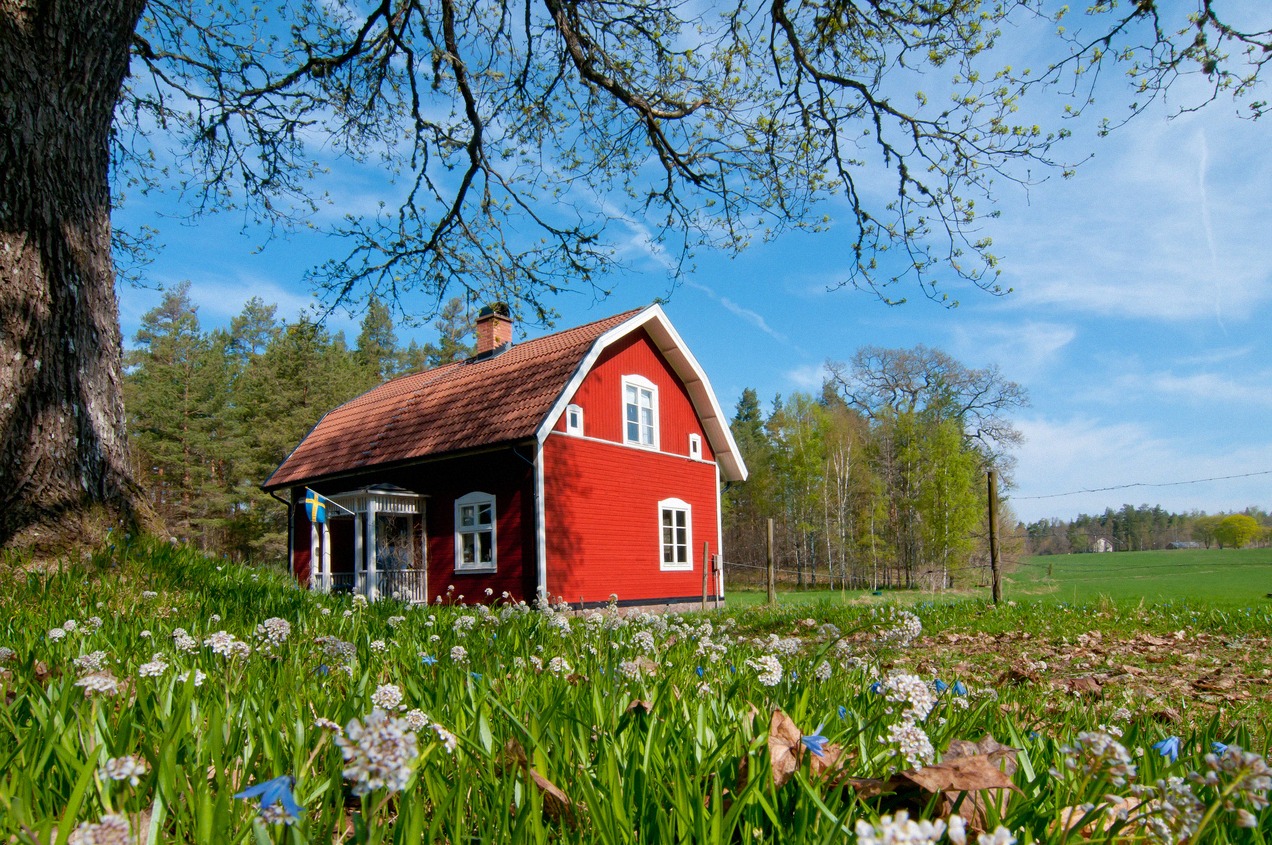
A holiday home of your own, called a stuga in Swedish, is for many the obvious way to experience Gotland. Your own kitchen, a garden, plenty of peace and quiet, and room for the whole family, it suits an island where the distances are long and the beaches are too. The classic look is a wooden house painted red or yellow; alongside these, limestone buildings with dry-stone limestone walls in the garden give the island its own regional style. Locations range from woodland edges and the quiet inland to right by the beach.
For families and anyone staying a week or longer, a stuga is often the most flexible option and, worked out per person, the cheapest. Travellers who prefer something more sociable or spontaneous will find alternatives in the camping and hotel guide.
Season: which price applies when
The high season roughly covers Swedish summer weeks 27 to 33, that is, early July to mid-August. Some owners define the summer peak season differently, as 13 June to 21 August; outside this window, low-season rates apply, with noticeably lower prices and better availability.
Booking terms are also least flexible in exactly those peak weeks:
- Weekly bookings only in high summer: in weeks around 25 to 34,
almost everywhere rents strictly by the week, with a fixed changeover day
- usually Saturday to Saturday, though some houses run Sunday to Sunday.
- Shorter stays at the edges of the season: from week 24 and from week 35 onwards, many owners offer short breaks (such as Sunday to Thursday) or long weekends (Thursday to Sunday). If you don't need a full summer house for a whole week, June or late August works better.
- Seasonal sites: some stugbyar (holiday-village complexes), such as Visby Strandby, only open seasonally, roughly April to September or May to August.
What does a stuga cost?
Prices vary a lot with location, size and facilities. A few documented reference points to give a sense of scale:
- Small, simple summer cottage: around 3,500 kr a week in the low season, about 5,500 kr in the high season.
- Budget stugor start at around 9,500 kr a week; large houses with nine to twelve beds run to 25,000-28,000 kr a week.
- German-speaking agency (example): one specific house at €630 a week in the low season and €840 in the peak season, including Wi-Fi, electricity, water, a washing machine and dryer, a sauna and two bicycles, with no further extras. The deposit here is 30% at the time of booking.
- Portal average: HomeToGo quotes an average of around €183 a night, with budget options from about €30 a night.
When comparing prices, it's worth factoring in the extra costs. The final clean typically comes to €70-80 on top and is often paid on site. In Sweden, bed linen and towels are usually brought by guests themselves - renting them normally costs around €10 per set. Whether Wi-Fi, electricity and water are included in the price varies from house to house; some include everything, others charge extra. So read carefully what the weekly rate actually covers before you book.
Popular locations on the island
Where you base your stuga shapes the character of the whole trip a great deal. Well-established areas:
- Visby: the main town, with the widest choice. Much of it is within walking distance, useful if you want to combine town and island and don't want to drive every day.
- Tofta / Gnisvärd: on the west coast south of Visby, home to the sandy beach at Tofta, often rated the finest on the main island.
- Ljugarn: the best-known coastal village on the east coast, quieter, with a long beach.
- Fårö / Sudersand: the neighbouring island to the north, reached by a free ferry from Fårösund in around six minutes, with one of the best swimming beaches in the region.
- The south, around Burgsvik and Hamra: more sparsely populated, good for anyone after real peace and quiet.
Because many houses sit off the beaten track, having your own car (brought over by ferry) or a hire car makes sense almost everywhere, only in Visby itself can you comfortably manage without one.
Size and facilities
Gotland's stugor tend to be compact. Houses of roughly 34 to 85 square metres are common; typical bed counts are 4+2 or 6+2, while larger houses sleep eight to twelve across two floors, often with sleeping nooks tucked into the loft. A fully equipped kitchen, a garden and a barbecue area are standard at most.
Comfort levels range from the simple summer cabin to the well-appointed house:
- Wi-Fi is available at many stugor and often included, if you rely on it, check the listing specifically.
- Premium houses sometimes offer a pool, fireplace, sauna, a private barbecue area, proximity to the beach or a golf course, and are often dog-friendly.
- Location details, such as the exact distance to the beach or transport links, are worth a second look, since they vary a great deal from house to house.
Where and when to book
Stugor are marketed through a wide range of channels:
- Local platforms and agents such as Stugknuten, Stugbasen, Fritiden, HyraGotland, the Gotlands Stug- och Lägenhetsförmedling, or Destination Gotland's own booking portal. Some of these (Stugknuten and Fritiden among them) charge no booking or service fee to guests.
- International portals such as HomeToGo, Belvilla, Novasol/DanCenter, Casamundo or Holidu, plus many private owners with their own websites.
- Combined packages: Destination Gotland's stuga package bundles a stuga with a return ferry crossing, advertised from around 900 kr per person (depending on season), a convenient way to sort out accommodation and the crossing together.
On timing, the advice is clear: book early. Popular houses for the peak summer weeks are often fully booked by winter, and ferry capacity is also limited in high season, planning several months ahead isn't overcautious in peak season, it's the norm. If you're flexible, June or late August are the alternative: cheaper, quieter, and with much better availability. Other types of accommodation are covered in the accommodation guide, practical notes on getting there in the getting there guide, and in the Gotland travel information.