
Food & Drink on Gotland
Lamb, truffles, saffron pancakes, island beer and whisky, where Gotland's specialities come from, when they're in season and where to try them.
Contents
An island with its own menu
Gotland is one of the sunniest places in Sweden: according to SMHI, Sweden's meteorological institute (1991-2020 average), Visby gets a healthy 2,000 hours of sunshine a year, with over 2,200 in 2024, and the island's southern tip, Hoburg, recorded a national record of 2,311 hours in 2023. This sunshine, lime-rich soils and a dense network of small producers explain why the island has developed its own culinary identity. Rather than vague claims about a "mild microclimate", it's worth looking at what's actually on the plate: lamb from the island's ancient native sheep breed, black truffles, asparagus, saffron, and home-grown beer and whisky.
If you want to eat regionally, you'll find the widest choice of restaurants in Visby, but the most interesting produce is out in the countryside, at farm shops, small distilleries and the harvest festivals in September.
Gotland lamb, protected and full of flavour
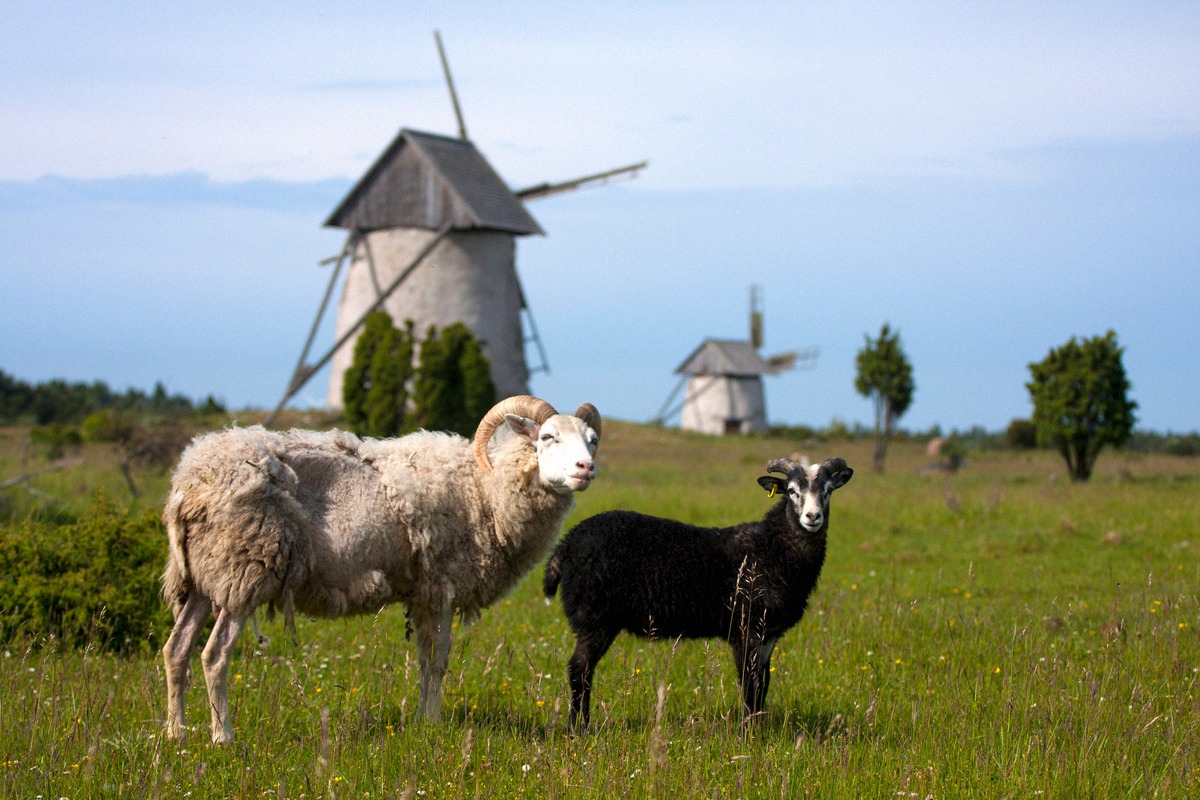
The island's best-known meat comes from the Gutefår, Gotland's original native sheep breed. Its meat is called Hånnlamb and was awarded EU Protected Designation of Origin (PDO) status in November 2016, only the third Swedish product ever to receive this protection. The strong, almost game-like flavour is no accident: it's written into the product specification, which combines the breed with natural grazing. The animals graze on herb-rich, lime-based dry grassland where wild thyme (backtimjan), among other plants, grows, and that shapes the flavour.
- Founding flock: The only remaining founding flock of Hånnlamb is in Snoder, in the parish of Sproge in southern Gotland; the meat is sold directly via hannlamb.se.
- Other farms: Dalis Gård and Rickeby Gård (both Gotlandsfår) sell direct from the farm, often as a lamb meat box; the collective distributor Gotlandspecialisten bundles produce from across the island.
- In restaurants: In Visby, Frimis puts whole grilled Gotland lamb on the menu in its garden, while Krönet serves island lamb with a sea view.
Truffles - Sweden's black autumn delicacy
Gotland's truffle is the Burgundy truffle (Tuber uncinatum), a black, autumn truffle. In Sweden it grows almost exclusively on Gotland (with a few spots on the neighbouring island of Öland), which makes it the island's culinary rarity. It's hunted using dogs of the Lagotto Romagnolo breed.
The main season runs from roughly mid-October to mid-December. During these weeks restaurants put truffle on the menu from starter to dessert, so if truffle is the reason for your trip, plan for late autumn, not midsummer. Harvests vary considerably from year to year: around 700 kilograms of saleable truffle were harvested in 2017, but only around 100 kilograms in the dry year of 2018. Truffles are processed and distributed partly through Tryffel of Sweden; the foragers themselves are organised in the Gotlands Tryffelförening.
Saffron, asparagus and the saffron pancake
Two crops that sound surprising for a Baltic island are well documented on Gotland:
- Saffron: Grown at Stafva Gård in Barlingbo, between Visby and Roma (about a 10-minute drive from Visby). The farm shop there sells local saffron products such as saffron ice cream and saffron rusks (saffransskorpor).
- Asparagus: The lime-rich sandy soils and long hours of sunshine favour asparagus growing, sometimes even earlier in the season than in Skåne, on the Swedish mainland. Season runs roughly from early May to Midsummer. Producers include Stenhuse Gård (a farm shop selling white and green asparagus, plus strawberries and wild garlic) and Hoas Hantverk, one of Sweden's largest organic asparagus farms (harvest roughly mid-April to end of June).
Saffron leads to the island's most famous dessert: the Saffranspannkaka. This Gotland saffron pancake, made from rice pudding, cream, eggs and almonds, is traditionally served with salmbär (arctic bramble) jam and cream. Its roots lie in medieval cuisine, access to saffron came via Gotland's role in the Hanseatic League.
Beer, whisky and spirits from the island
Gotland has its own brewing and distilling scene that goes well beyond a single island beer:
- Gotlands Bryggeri: the island's central craft brewery, founded in 1995 by Johan Spendrup, in the middle of Visby at S:t Hansgatan 47, inside the UNESCO-listed town wall. It produces around 22 beers in total, with five to seven new releases each year (among them Wisby Lager, Wisby Wit and the Bulldog range). The brewery grounds can be visited in summer; outside that season, tours are available by prior arrangement, check the brewery's website for exact times.
- Gotland Whisky: based in Romakloster near Roma, distilling since 2012. The grain comes from local farmers, and both maturation and bottling take place on the island; every bottle is KRAV-certified (organic).
- Small distilleries: There are also several micro-distilleries - Bräntings Bränneri (in a former military bunker near Bunge, using organic malt), Boge Bränneri (near Slite, fruit and grain spirits), Gotlands Spirits (made from Gotland autumn wheat) and Hellström Gin (in a former dairy in Hablingbo).
Then there's cider: Halfvede Musteri is Gotland's largest cider house (and also Sweden's largest mobile cider operation), based since the 2024 season at Siglajvs Gård in När, the cider is made purely from Gotland apples, with no additives. Another cider producer is Käbbe Gård in Eksta. Liqueurs are harder to pin down: what's documented is that the producer Spriteriet uses Polka raspberries from Stenhuse Gård for a raspberry liqueur, and that sea buckthorn (havtorn) is turned into liqueur regionally.
Farm shops and harvest festivals, where to try it all
Gotland's farm shops mostly run from summer into autumn. Many are unstaffed, with payment via Swish (Sweden's mobile payment app) or cash; opening hours vary a lot and are worth checking with the farm in advance. A good place to start is the already-mentioned Stafva Gårdsbutik in Barlingbo: it brings together produce from numerous makers (Stafva Mejeri, Guteglass, Halfvede Musteri, Gute Rosteri, Ö-chips) and stocks honey, saffron ice cream, salmbär jam, cider, cheese and truffle oil, in summer it also serves lunch daily.
If you want to experience the whole producer scene in one go, plan around the autumn events:
- Gotlands Skördefestival (harvest festival): in 2026 on 5-6 September, 10:00-16:00 each day, at Gotland Grönt Centrum in Lövsta near Roma, a large "farm to fork" food market with producers, animals and exhibits.
- Gotland Taste Festival: in 2026 from 25-27 September, island-wide with producers, restaurants and farms taking part; on the Saturday there's a food market and performances at Stora Torget in Visby.
Regular weekly farmers' markets on a fixed day throughout the season are harder to rely on, it's safer to plan around the events above and the farm shops. More dates through the year are listed in the Events guide.
Eating regionally in Visby
Visby has the widest choice of restaurants, from harbourside fish shacks to fine dining in the medieval lanes. A few addresses with a regional focus (kitchen style partly drawn from guides, worth checking current details):
- Frimis: grills whole Gotland lamb in its garden, alongside fish and vegetarian dishes.
- SNACK mat&bad: Gotland cuisine with meat, fish and vegetarian options.
- Bakfickan on Stora Torget: fish and seafood, fried herring, fish soup.
- Krönet: Gotland lamb with a sea view.
If you have time, combine a restaurant meal in Visby with a trip out into the countryside, a farm shop, a distillery or the cider house along the way, to taste the island where its ingredients actually come from. Practical tips on getting around are in the Gotland travel information guide.